
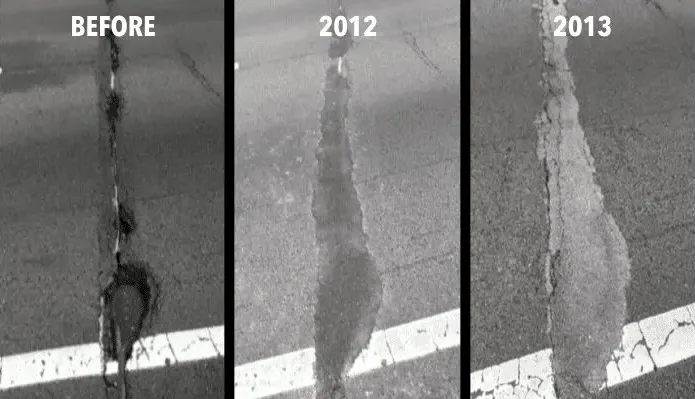
In July 2012 potholes opened around a bridge expansion joint on I-95 near Dunn, North Carolina. The North Carolina Department of Transportation called the joint a motorcycle hazard. The section had already been patched more than once and failed each time. NCDOT poured Perma-Patch straight from the bag overnight.
The problem: the joint kept taking the patch back
A bridge expansion joint is where asphalt, concrete and steel all meet, and all three move at different rates through a temperature swing. Potholes had formed around this one on a heavily traveled stretch of I-95. NCDOT flagged it as a motorcycle hazard. Previous repairs in the same spot had not held.
- Three materials, one seam. Asphalt, concrete and steel, each moving differently.
- A repeat failure, not a first attempt. The section had a history of patches coming out.
- Interstate traffic control. Whatever went down had to take traffic immediately.
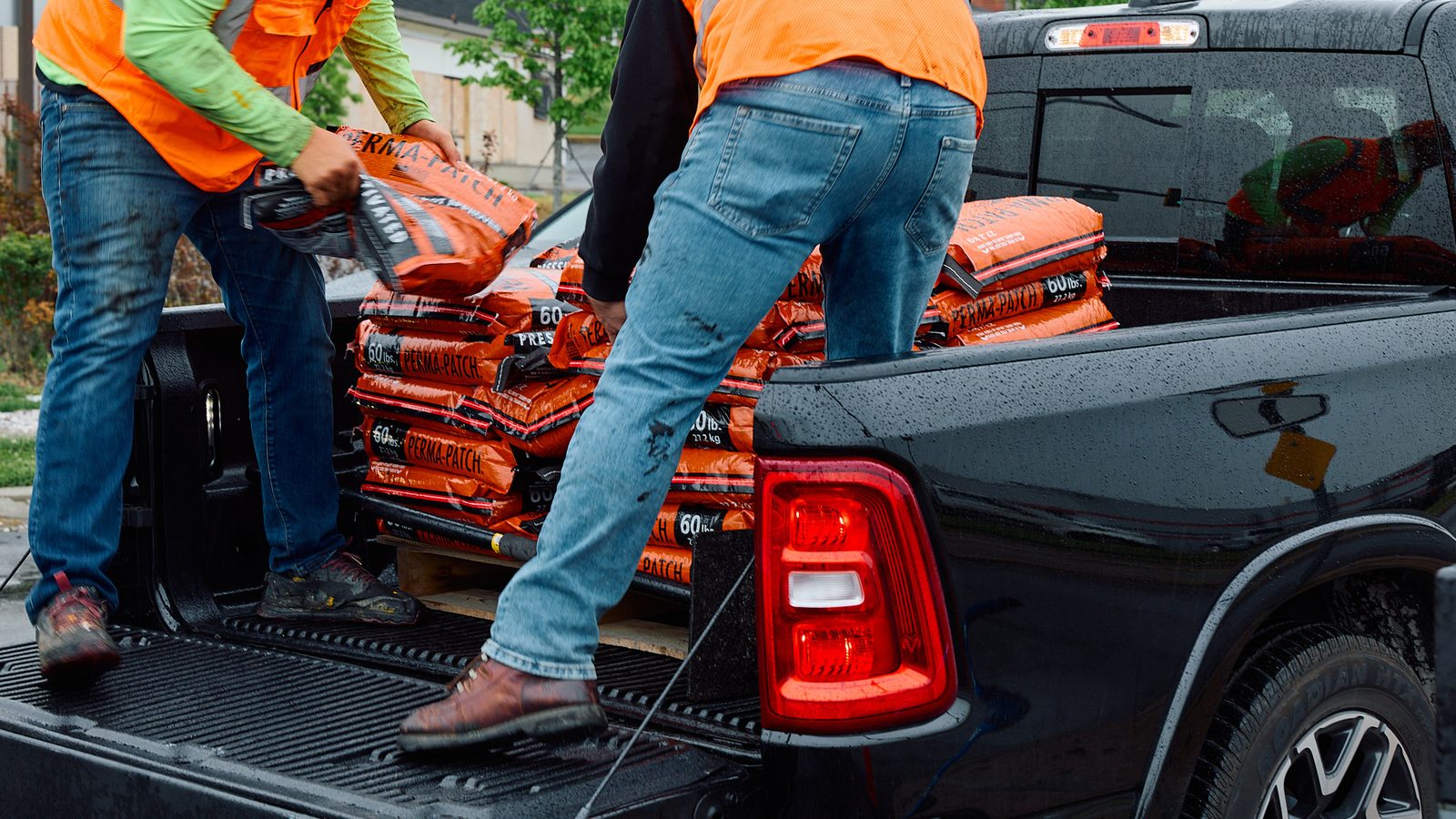
The fix: poured from the bag, overnight
Perma-Patch Regular Mix goes in ready to use. No mixing, no tack coat, no heating, and no specialized equipment on the bridge deck. The crew poured it, spread it, and compacted it.
It is pressure activated, so it hardens under compaction rather than curing on a clock. The lane took traffic as soon as the crew was clear, which is why the whole repair fit inside one overnight window.
Put it on your worst pothole.A rep in your area will follow up and have a sample shipped.
Request a sampleWhat the federal study found
The Strategic Highway Research Program put cold patch products on real roads and went back for four and a half years to count what was still there. Perma-Patch Regular Mix had the lowest failure rate of every product tested.
- Failed at 18 months
- 26% to 52%
- 18%
- Failed at 4.5 years
- 32% to 65%
- 22%
- Fills needed per 1,000 potholes, over 4.5 years
- 1,655 to 2,019
- 1,489
Federal Strategic Highway Research Program, National Research Council. Ranges cover premium bulk at the low end and bagged or local bulk at the high end. Full report at permapatch.com/shrp.
“A bridge joint moves. Any patch you put there comes out.”
That is why the transition matters more than the fill. Perma-Patch bonds to asphalt, concrete, steel and wood, which is every material meeting at a bridge joint, and the polymer-modified binder is built to seal and re-seal as the joint works. The spec sheet lists bridge expansion joints as a named application, and the full spec is in the submittal package.
What crews ask about bridge joints
What temperature can crews work in?
Anywhere from −5°F to 105°F. No mixing, no tack coat, and no waiting for the material to come up to temperature.
How thin can it go?
A quarter inch is the minimum. There is no maximum depth, deep repairs just go in three-inch lifts.
When can traffic come back?
As soon as it is compacted. The material is pressure activated and hardens under compaction, so the passing traffic finishes the job.
Does the hole have to be dry?
No. It can be placed in water-filled holes.
What does it bond to?
Asphalt, concrete, steel and wood. It does not stick to rubber tires.
How much does a bag cover?
A 60 lb bag fills 0.48 cubic feet, about 6 square feet at an inch deep. Overfill by half to three quarters of an inch before compacting.
Related
Put it on your worst hole
Request a sample or an on-site demonstration and let the pavement decide.
Request a sample