
Tampa already knew what Perma-Patch® does to a manhole collar. Some of the ones Rowland placed in 2016 are still sealed. So when the city moved to full ring rebuilds in north Tampa, they used the version built for it. Perma-Patch Aqua™ goes down cold, gets hosed with water, and takes traffic as soon as it is compacted.
The Problem: A Ring Rebuild Is a Lane Closure with a Cure Time Attached
A failed manhole collar is not a pothole. The frame has to come back to grade, which means saw-cutting the square out, resetting the frame, and rebuilding the ring around it. Do that the conventional way and you are waiting on concrete.
- Supply. Ordering hot mix for a repair this size means asking a plant to run a batch for a few hundred pounds. Minimums are measured in tons, plants close seasonally and on weekends, and the mix has to go down while it is hot, so whatever is left in the truck at the end of the run is waste.
- Grade. The frame sits low and the collar spalls. The ring has to be rebuilt, not filled.
- Cure. A cure window holds the lane, and traffic control costs more than the material.
Perma-Patch Aqua™ sits in the warehouse until the work order comes, guaranteed one year from manufacture. No plant call, no minimum order, no window to hit. Pails you do not open go back on the shelf.
The Fix, Step by Step
This was the sequence Rowland ran, start to finish, inside one lane closure.
1. Found the Failure
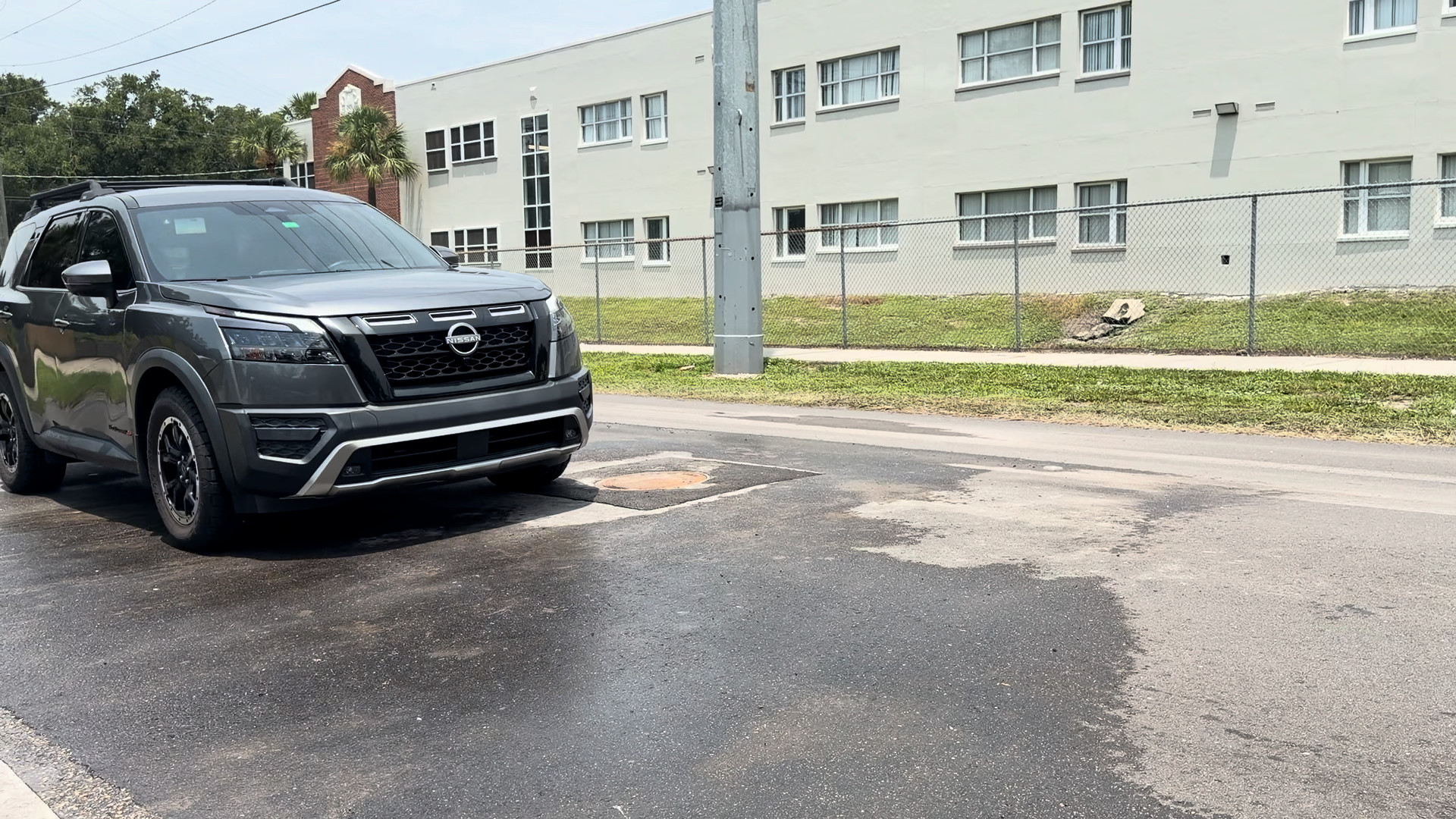
The collar around the frame had broken down and the cracking had run out into the lane. This was the point where a surface patch would buy a few months and then the problem would just come back.
2. Cut the Square and Set the Mortar Collar
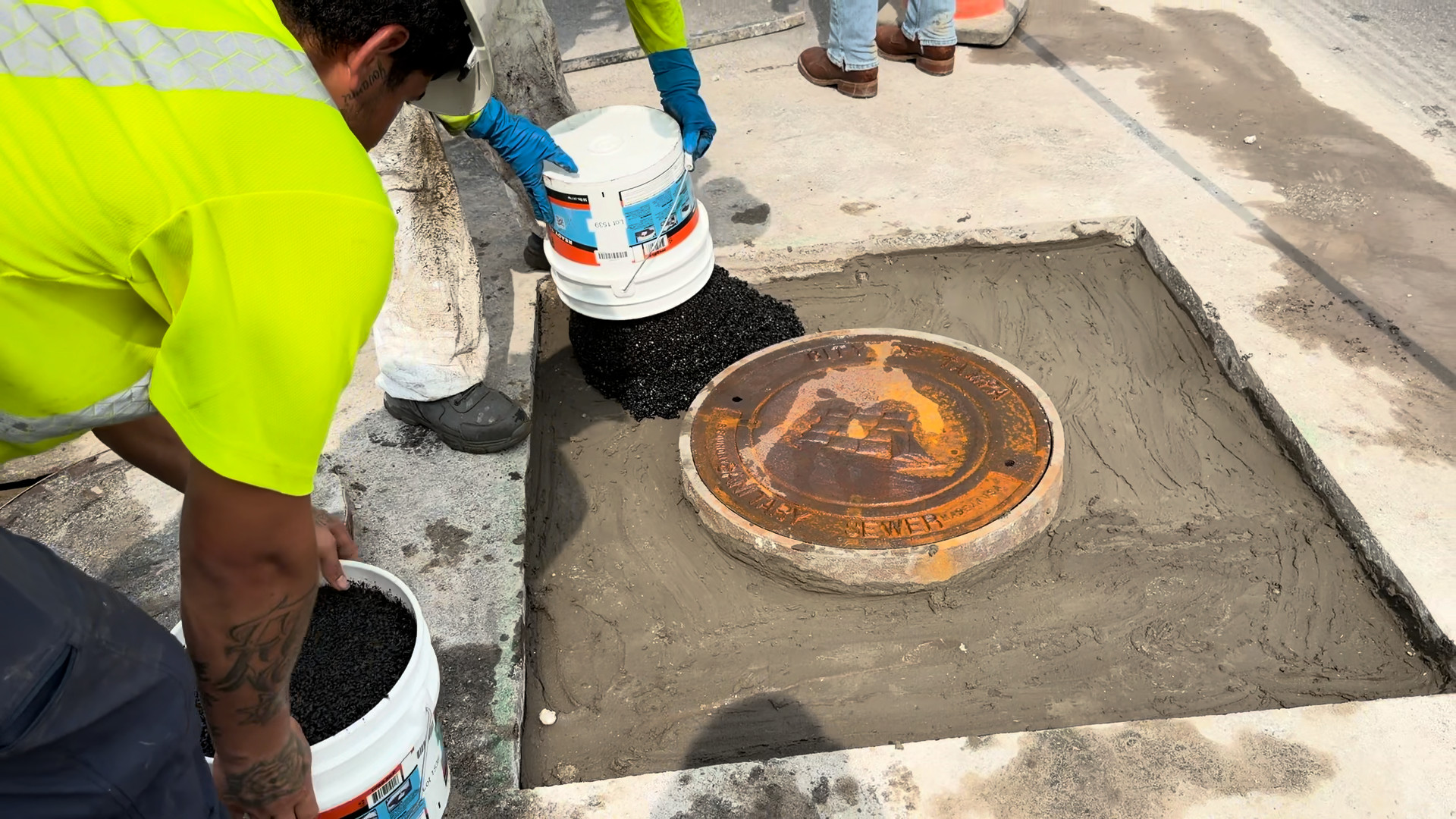
Saw-cut a clean square, broke out the failed ring, and troweled a mortar collar around the frame to bring it back to grade. Perma-Patch Aqua™ bonded to the straight cut edge. Used two pails of mortar.
3. Poured Perma-Patch Aqua™
Six 50-pound pails, cold, straight out of the bucket. Aggregate was 3/8 inch and down, so it worked into the joint around the frame instead of bridging it.
4. Spread to the Cut
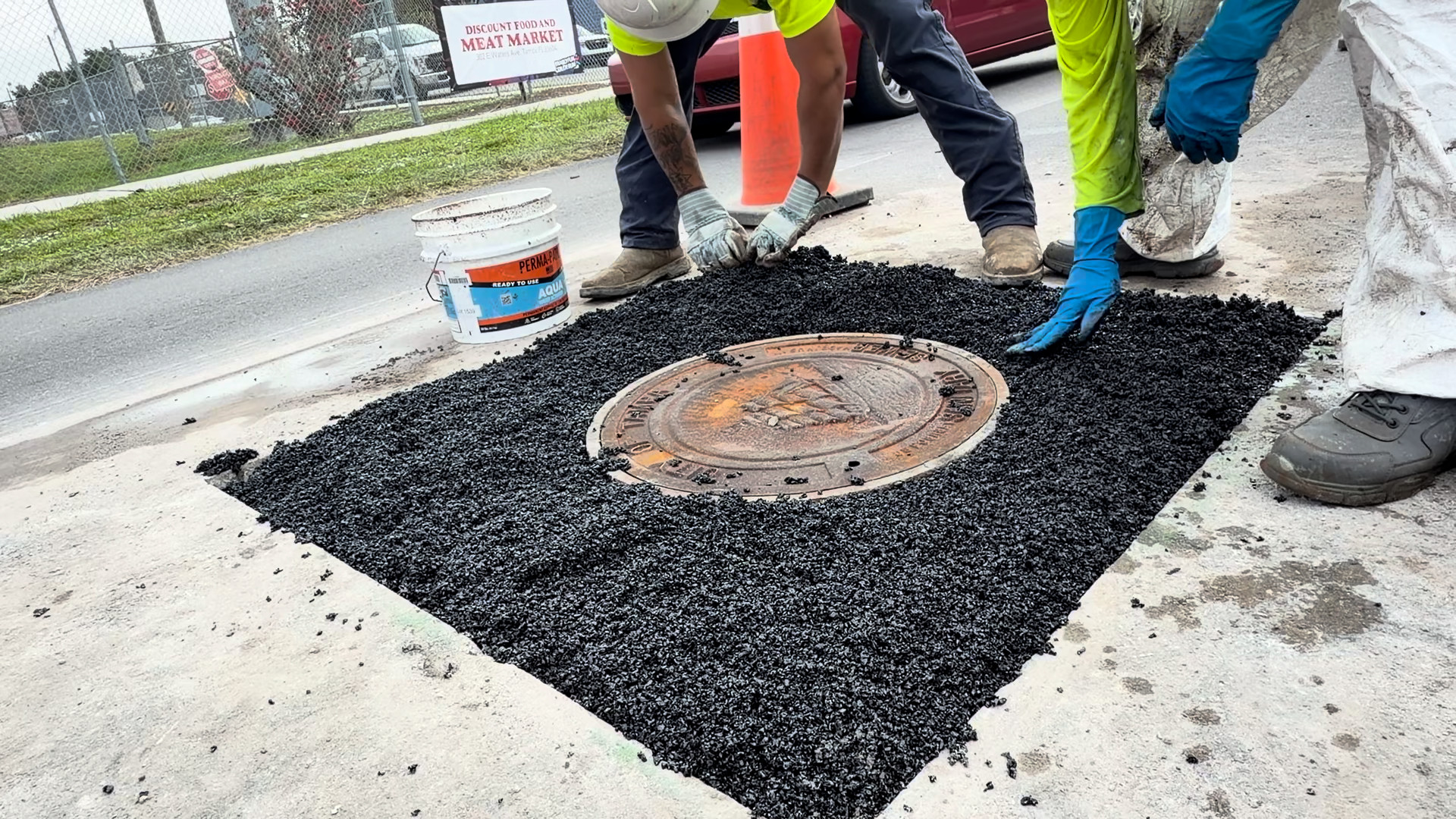
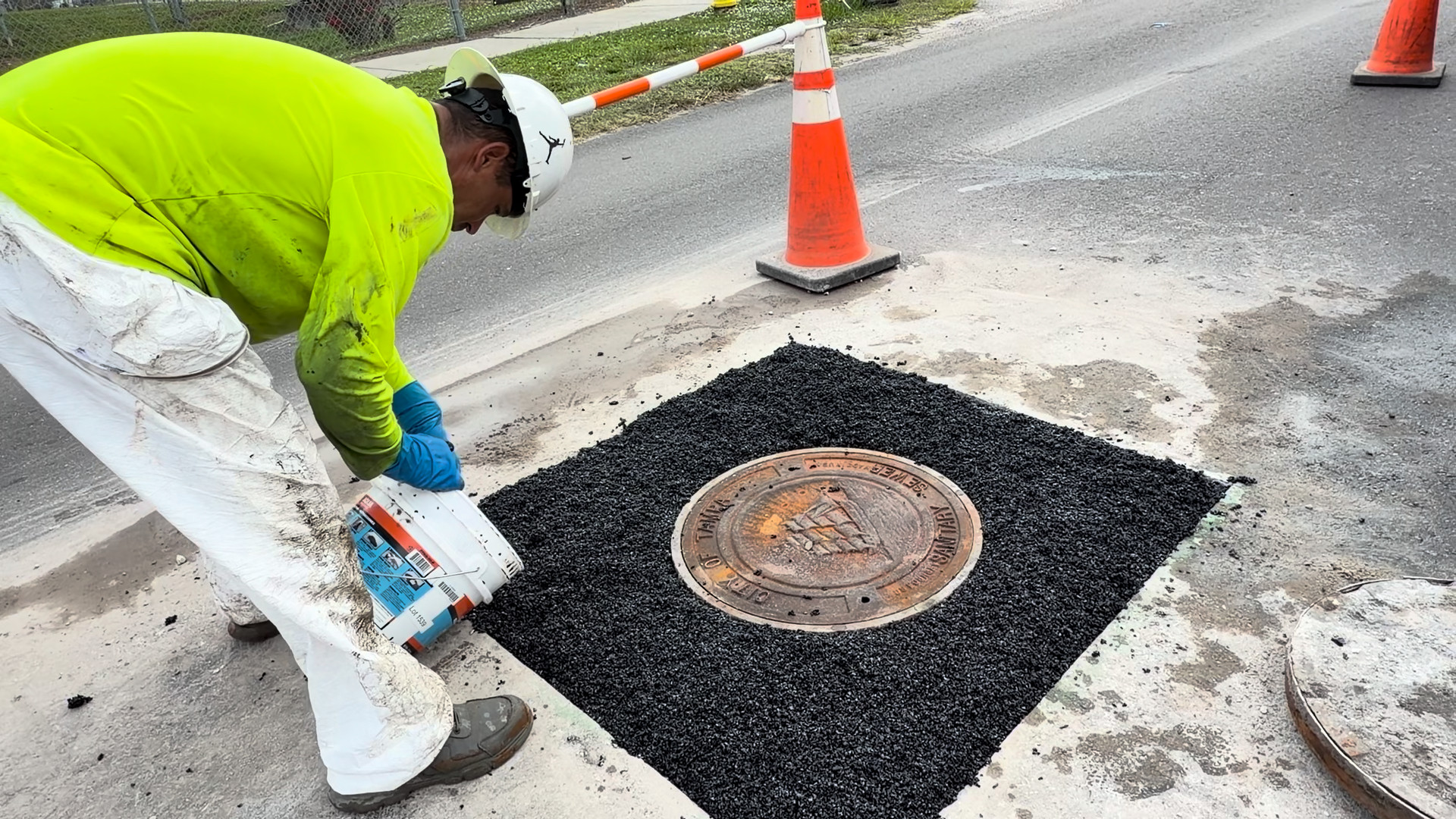
Worked out by hand and by shovel to every edge of the square. Perma-Patch Aqua™ bonds to asphalt, concrete, and steel, which on this repair means the old pavement, the new mortar collar, and the cast iron frame all get the same bond.
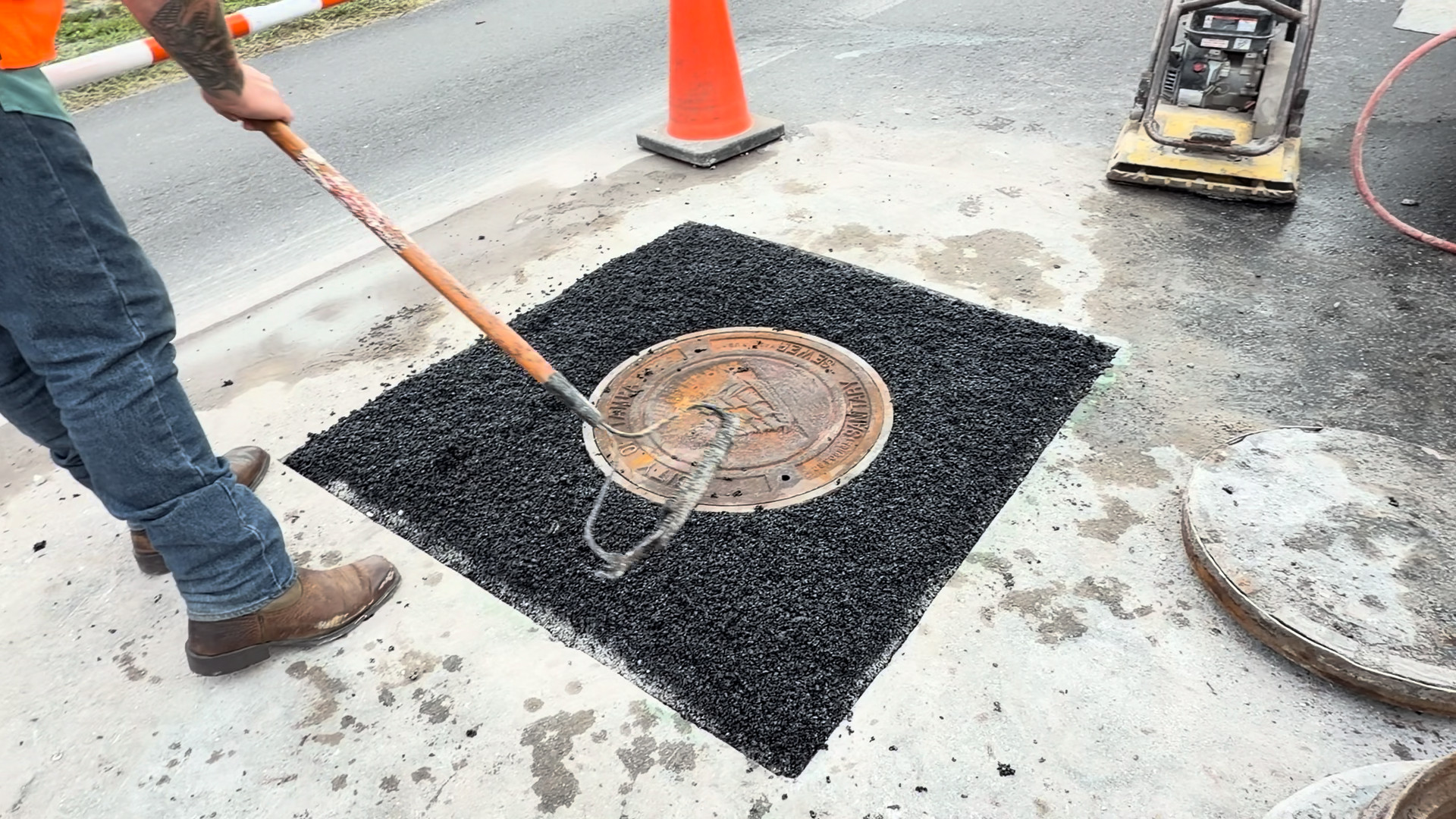
5. Raked to Grade
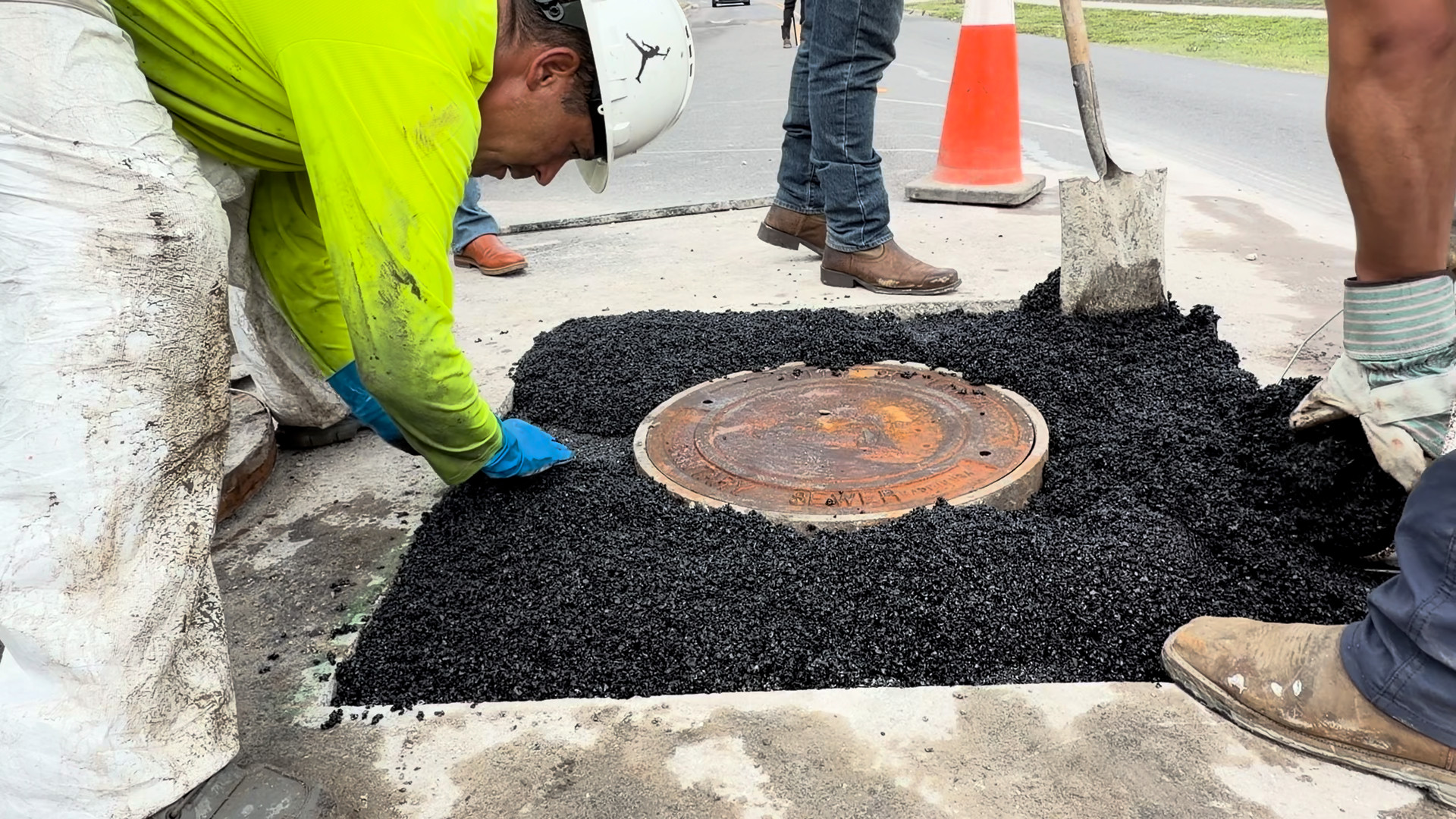
Pulled level with the surrounding pavement and left slightly proud so it compacted down flush. At 1 inch, one 50-pound pail covers about 5 square feet, so the count was predictable before the crew left the yard.
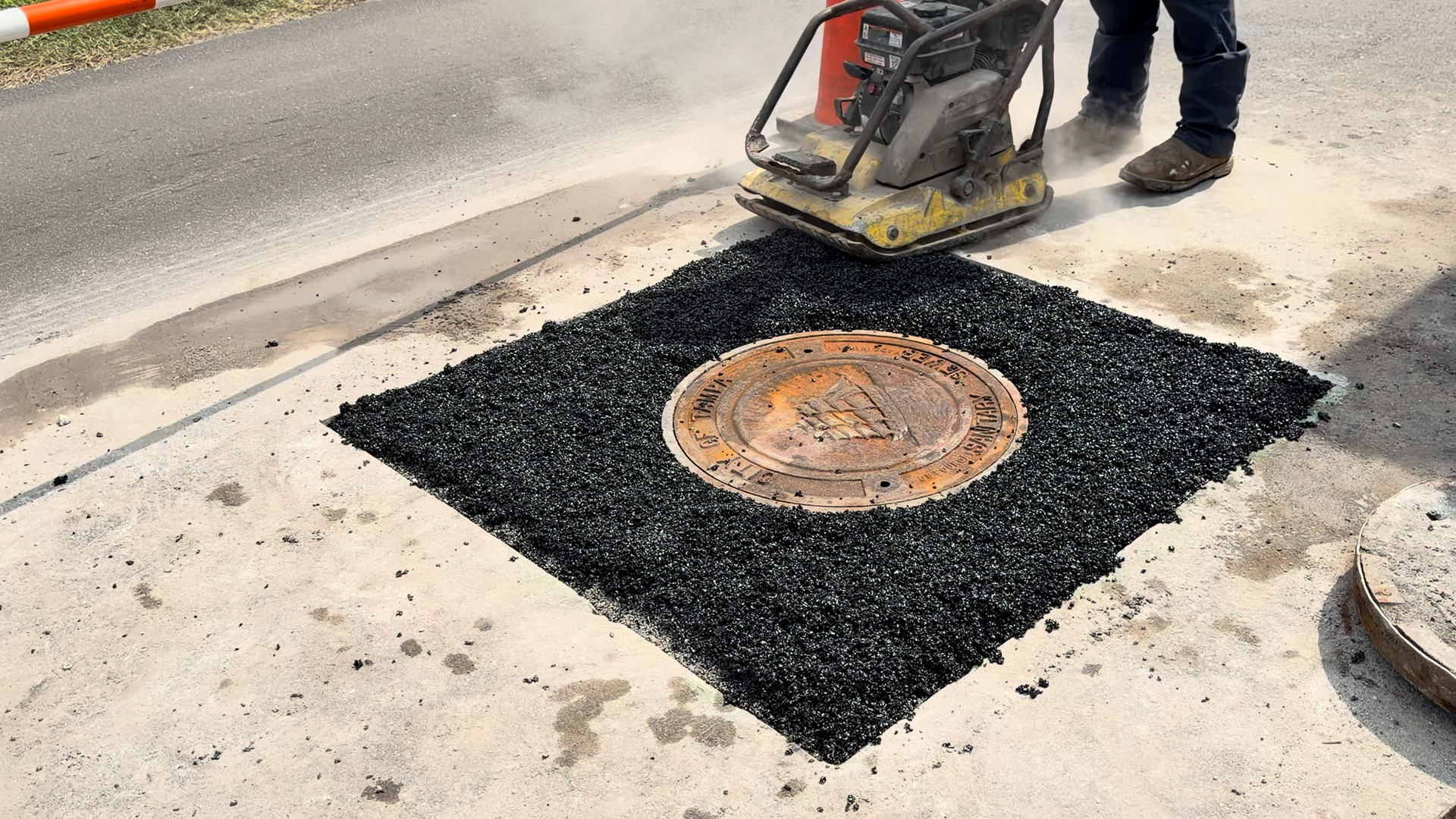
6. Compacted
Used plate compactor across the square and around the frame until the surface tightened and went flat. A hand tamp can work as well, however, the plate compactor is faster and leaves the surface flatter. Water can go on before or after this pass, either order sets the same.
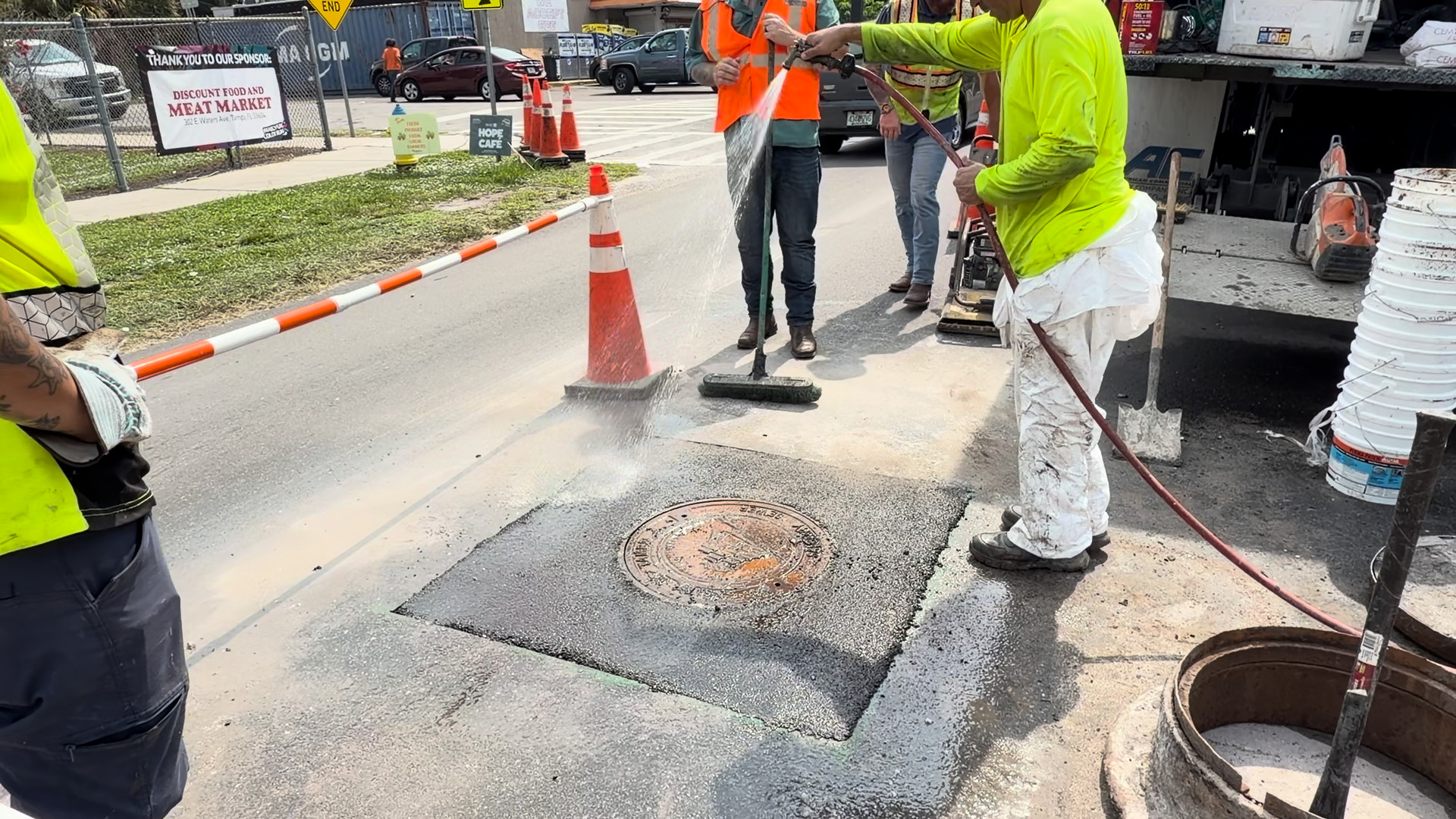
7. Added Water
Used a hose over the whole square. Tip: A minimum of one pint per 50 pound pail. In practice, this crew was generous with it. This was the step that looked wrong to anyone who had spent a career keeping water out of a repair. However, here the water was the trigger, and once it was in, the set started.
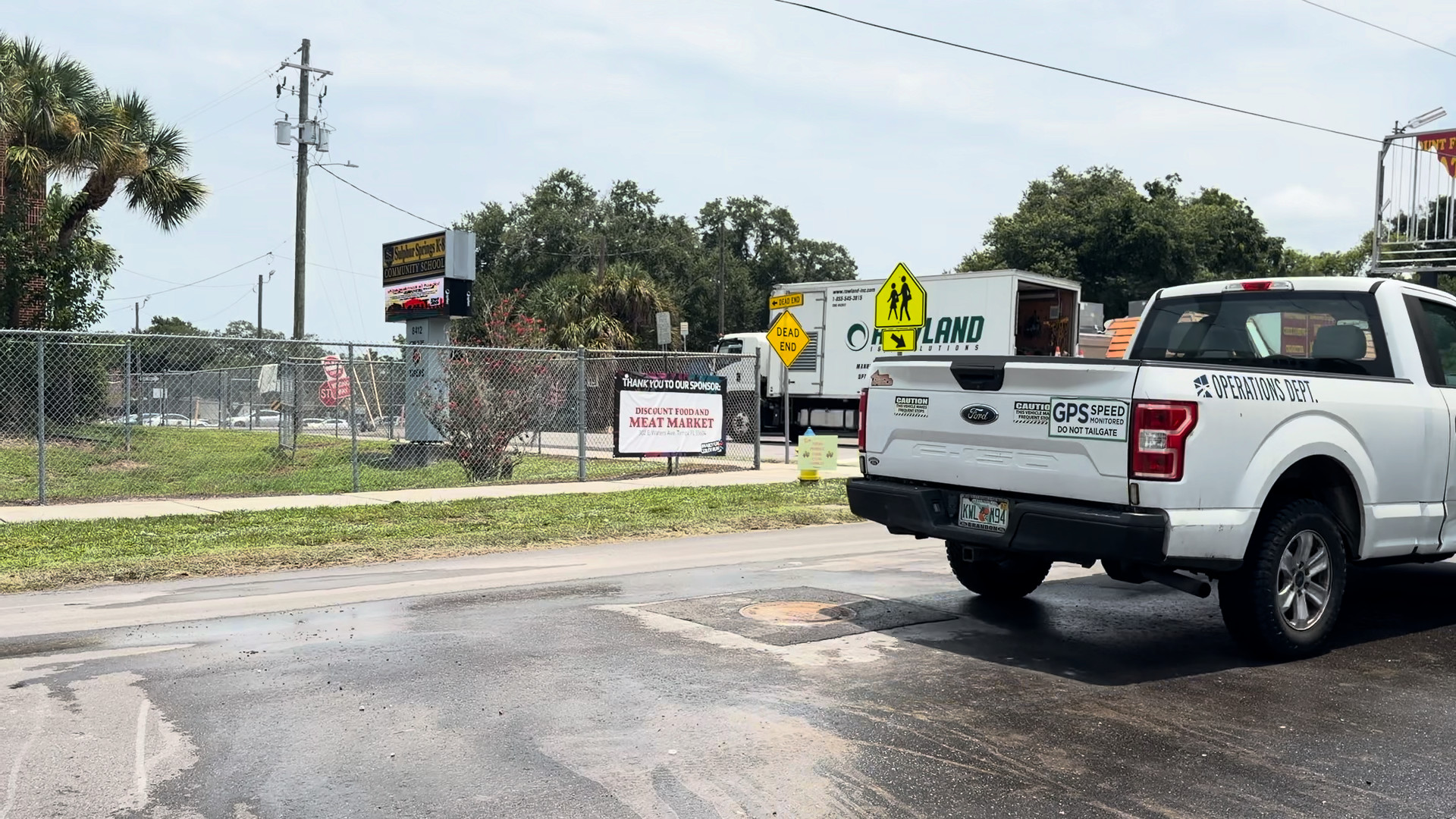
8. Open the Repair to Traffic
Swept the area, pulled the cones, and then allowed traffic. Since the patch began setting as soon as it was compacted, the repair area could be open to traffic immediately. Full cure takes 24 hours.
Try a Pail on Us. You will know by the end of the shift.
Request a sample.Perma- Patch Aqua™ Against Hot Mix
- Getting the Material
- Plant batch, minimum by the ton
- Pails off your own shelf
- Storage
- Place it the day it is made
- 1 year from manufacture
- Bonds to
- Asphalt
- Asphalt, concrete, and steel
- Solvents and VOCs
- Varies
- None
Perma-Patch Aqua™ column from the PPAQ-50-P product data sheet. Hot mix column is trade-common practice, not document-sourced. Placement sequence recorded on site in north Tampa with Rowland, an AllClear company.
“City Inspectors have never seen a product hold up this well and set up this quickly.”
On-site inspector, City of Tampa
Water Isn’t a Delay. It’s the Activator.
Every asphalt patch you have placed needed a dry hole, because water blocks the bond. Perma-Patch Aqua™ is polymer modified and water activated, so the hose is not contamination, it is the trigger. That matters most on exactly this repair. The joint around a sanitary frame is wet more often than it is dry, and a material that needs the hole dry loses days waiting on Florida. The full gradation and performance data are in the Perma-Patch Aqua™ submittal package.
Questions Crews Ask on the First Frame
How much water does it actually need?
A minimum of one pint per 50 pound pail. Crews on this job ran a hose over the whole square rather than measuring, which is fine. The failure mode is too little water, not too much.
Does the mortar collar have to cure before the Perma-Patch Aqua™ goes on?
No. Our product can go on in the same shift and compaction locks the collar, the patch, and the frame together. Perma-Patch Aqua™ bonds to concrete and steel as well as asphalt, which is why the three pieces behave as one.
How long before traffic?
As soon as it is compacted. Full cure is 24 hours, but the patch carries load before that, so the lane does not sit closed waiting on the chemistry.
How deep can it go?
Quarter inch minimum, and there is no practical maximum. Deeper repairs go in 3 inch lifts. A collar rebuild usually needs the depth, which is where the bagged alternative gets heavy.
How much do we order for a frame?
About 5 square feet per 50 pound pail at 1 inch. Measure the square, pick your depth, and the count comes out before anyone leaves the yard. Pails ship 36 to a pallet.
Any solvent or VOC exposure for the crew?
None. The material is free of solvents and volatile organic compounds. Normal skin protection still applies, prolonged contact can irritate skin. Handling detail is in the SDS.
Does it work on concrete pavement too?
Yes. It bonds to asphalt and concrete, which is why it suits utility work where the cut runs through both.
Related
Specifying Manhole Collar Work This Season?
The Perma-Patch Aqua™ submittal package carries the gradation, the water ratio, the cure data, and the placement detail your engineer will ask for. One PDF, no call required.
Download Submittal Package